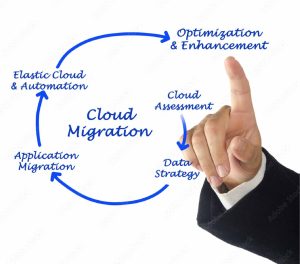
The days of your company still relying on clunky, outdated infrastructure are over. Your finance team might be in the early stages of a cloud migration project but you’re not alone – it’s estimated that 70%+ businesses within this sector have yet to make any significant moves towards modernizing their IT systems with cutting edge technology like Microsoft Office 365 or Salesforce CRM.
If chaining yourself down isn’t an option anymore because there is too much at stake, then SowCrown
technologies offers managed cloud migration services.
sejeason
Why should your business migrate to the public cloud?
Businesses are increasingly turning to the public cloud as a way to improve efficiency and cut costs. There are many reasons to make the switch, but here are three of the most important:
The public cloud offers a high degree of flexibility, allowing businesses to scale up or down as needed. This can save money on IT infrastructure costs, as well as giving businesses the ability to respond quickly to changes in demand.
Public cloud providers offer highly reliable services with uptime guarantees. This can be a major advantage for businesses that cannot afford downtime, or that need to meet strict compliance requirements.
The pay-as-you-go nature of the public cloud can help businesses save money on IT costs. In addition, public cloud services often include discounts for volume usage, making them even more cost-effective.
What is Cloud Migration?
Cloud migration is the process of moving data, applications, and other resources from a traditional on-premises infrastructure to a cloud-based environment. The main benefits of cloud migration include increased scalability, flexibility, and cost savings. By moving to the cloud, businesses can quickly scale up or down as needed, without having to invest in additional hardware. Cloud-based resources are also highly flexible, allowing businesses to rapidly deploy new applications and services. services such as storage, computing power, and software platforms in order to streamline processes, improve efficiency, and reduce costs.
What happens in a cloud migration strategy process?
A cloud migration strategy is a process that helps organizations move data and applications from on-premises servers to the cloud. The first step is to assess the current IT infrastructure and identify which assets can be moved to the cloud. Next, a plan is created for migrating the selected assets in a way that minimizes disruption to business operations. Once the plan is in place, the actual migration process can begin. This usually involves moving data and applications to cloud-based servers, configuring security settings, and testing the new system to ensure that it is functioning properly. Contact us to learn more.